

How to Read this Newsletter
Humanity is living through an extraordinary time of transformation. In just over a century, we have accelerated our scientific understanding so profoundly that we can create energy sources which give our species an unprecedented competitive advantage over other life on earth. This has resulted in an explosion in the human population, as well as a quantum leap in our technological prowess.
Yet, the combined forces of energy, population and technology have had the unintended consequences of placing significant pressure on the ecological systems which support life.
It’s all connected.
In these newsletters, InContext will examine what is happening in the world through the following five lenses.
Human Scale and Pressure
How many humans is the system currently carrying—and how is that changing?
Energy and Material Use
What is the system metabolizing to sustain itself?
Ecological and Biological Consequences
What non-human biological systems are being crowded out?
Conflict and War
Where is systemic stress converting into conflict and violence?
Acceleration of Technology
What new technological capabilities recently entered the system?
This newsletter will present high-level data points, along with brief narratives and sources. The goal is to help you, the reader, understand how these multiple forces are interacting with each other, and shaping the world in real time.
This newsletter will be published periodically and is therefore a long read. Consider absorbing the information in more than one sitting.
Editor’s Note: the InContext newsletter presented by Restoration Economics is Class 2 content, as described in our AI Disclosure Policy.
Human Scale and Pressure
How many humans is the system currently carrying—and how is that changing?
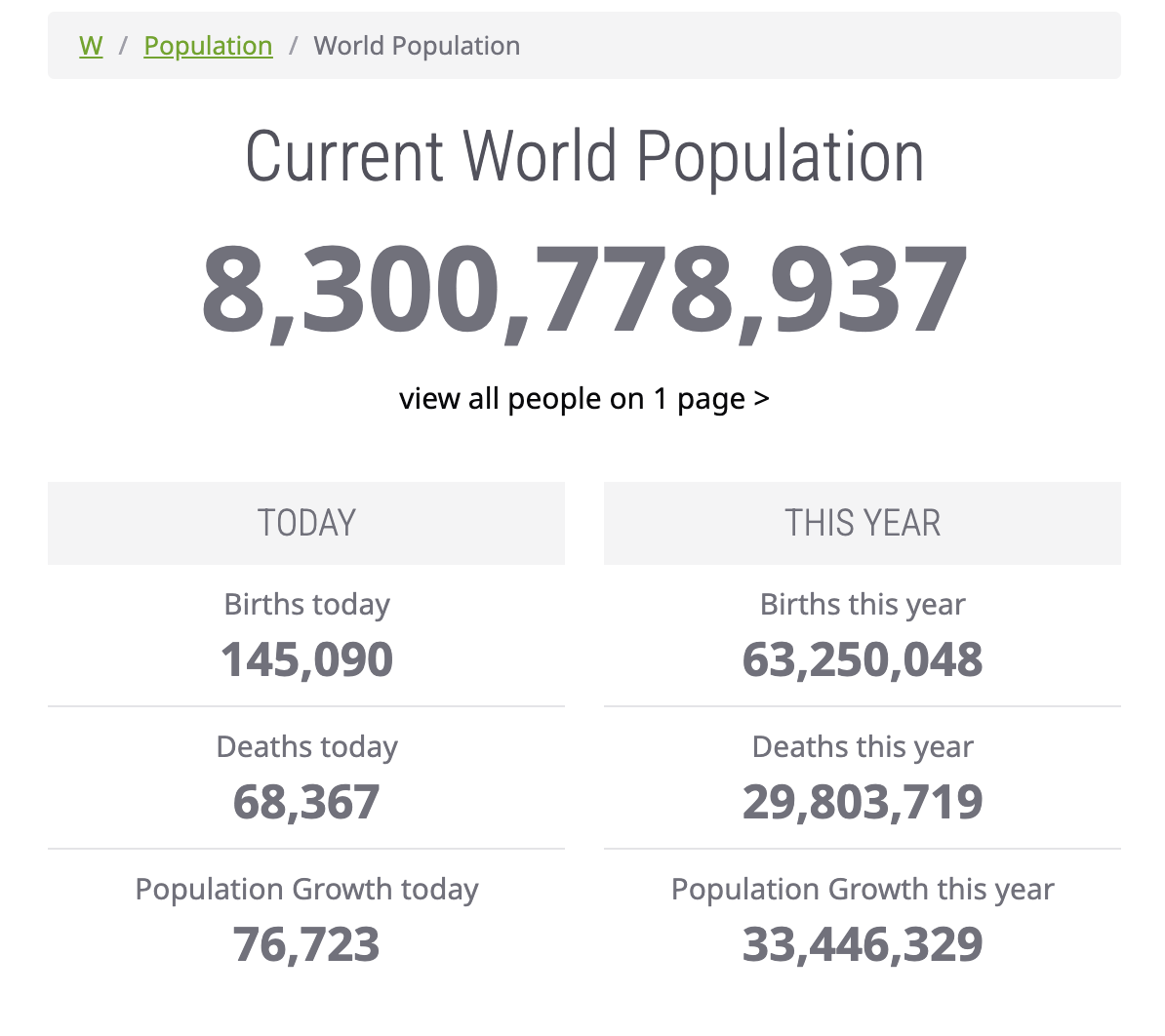
The population issue is a slow-moving data point. Short of a catastrophic event, we won’t see major movement in population within a few months’ time. As of June 22, 2026, the WorldOMeter has the global population at around 8.3 billion people, showing a net increase of 33 million people living on the earth so far this year. (Estimated births to date minus deaths to date).
The top three countries by population are:
India with an estimated population of approximately 1.476 billion people.
China with an estimated population of approximately 1.413 billion
United States with an estimated population of close to 350 million.
For a more detailed description of how the global population has shifted dramatically since 1960, see our March InContext newsletter.
Energy and Material Use
What is the system metabolizing to sustain itself?
Sustaining 8.3 billion people requires continuous use of energy and materials. What does that energy and material use look like today?
We do not have data available yet for 2025, so we continue to present numbers from 2024.
From The Energy Institute’s Statistical Review of World Energy.
This review shows that fossil fuels still dominate the energy mix, contributing 86% to global energy production. Nuclear contributes approximately 5%, with renewables, including hydro-electricity, providing 8-10%.
In 2024, the supply of energy increased about 2%, according to The Energy Institute. Growth in demand for energy continues to outpace growth in supply.
The total renewable energy supply increased by 8%, with China being responsible for more of this increase than the rest of the world combined.
A word on renewables:
“Back in 1990, renewables represented just 3% of the total global energy mix. Since then, the energy landscape has changed significantly as nations have sought to decarbonise their energy systems to tackle the effects of climate change. Since 2000, the annual growth rate of renewable energy has consistently been above that of all other forms of energy. Since 2006 their growth has averaged over four times that of the annual average growth rate of total global energy demand. Over the past five years, this has increased to over five times that rate.” (https://www.energyinst.org/statistical-review)
Will They Or Won’t They? Reopen the Strait of Hormuz
The war on Iran instigated by the United States and Israel has been chaotic since its inception in late February 2026. As of June 22, 2026, oil is currently trading around $75 a barrel, a significant decrease from its peak of $100-$110 a barrel earlier in the year.
The weekend of June 20th, government representatives from the United States and Iran met in Switzerland. Both countries have stated their intention to work towards a final peace deal within the next 60 days. Keeping the Strait of Hormuz open is key to this negotiation. (As reported in USA Today.)
The Strait of Hormuz, which is a narrow waterway between Iran, the United Arab Emirates and Oman in the Middle East, once transported about 20% of the world’s oil and 20-25% of the world’s liquified natural gas to global markets. But this traffic has decreased significantly in recent months, putting pressure on oil prices, fertilizer and other essential energy products.
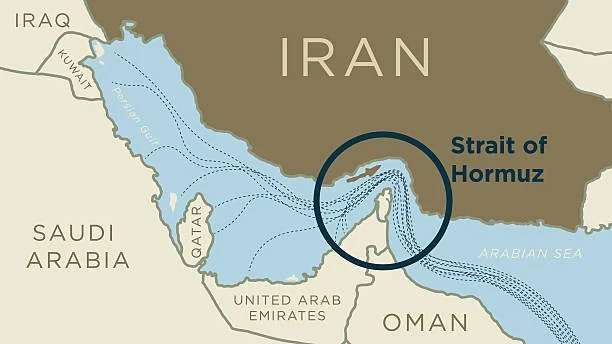
As peace talks are under way, the Strait has been more open at times compared to prior months. But Iran has shown its willingness to close the Strait to put pressure on the negotiations. US Central Command said that 55 merchant ships transited the Strait of Hormuz on Saturday June 20th. But transits dropped to 12 ships on Sunday when Iran closed the Strait again.
As reported by MSN’s Tsvetana Paraskova, “It appears that any normalization is weeks away, at best, and shippers and insurers are not racing to test the fragile ceasefire and contradicting messages about how open the Strait really is.”
Strain Grows on Shipping Industry
Jonathan Saul of Reuters reported on June 3 that shipping companies are attempting to resume traffic through the Strait of Hormuz. But safety continues to be a question.
“For traffic to return to pre-war levels, when on average 125 vessels passed via Hormuz daily, ship operators will need solid assurances of safe passage, in which the international community would need to be involved, (Rene Kofod-Olsen, V. Group CEO ) said.”
The full reopening of the Strait of Hormuz, with the attendant increase in supply and drop in prices, cannot realistically happen until there is a cessation of “kinetic activity” - meaning a durable peace between Iran, Israel and the United States. Even if such a peace were to materialize, it is unclear how long it will take for movement of oil through the Strait of Hormuz to reach pre-war levels.”
Oil Reserves Are Being Drawn Down
Because the war with Iran compromised the Strait of Hormuz, the world lost market access to an estimated 10-11 million barrels of oil per day. To prevent market shock and significant price increases, many governments and global agencies released strategic oil reserves earlier in the year. This was meant to create a buffer in relation to the lost oil.
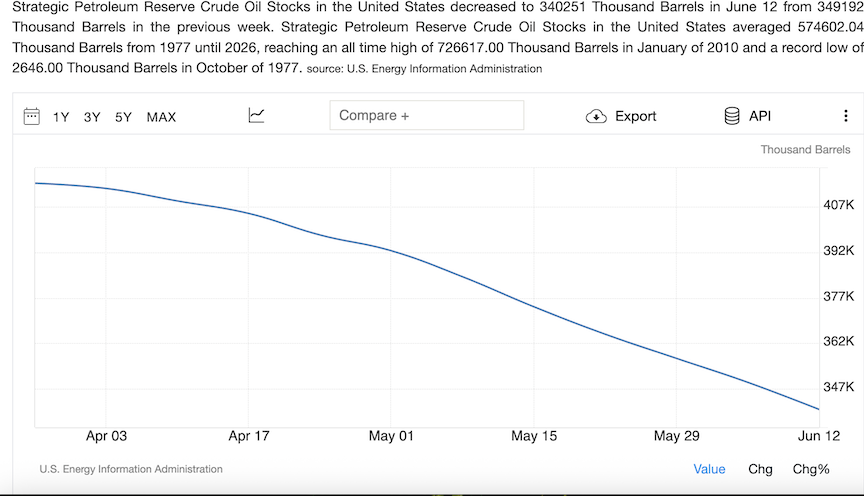
Heading towards the close of June, the United States’ Strategic Petroleum Reserve is approaching its lowest levels ever.
“The SPR is down 75 million barrels, or 18%, since the war with Iran started in late February….That leaves the US emergency oil reserve with 340.3 million barrels of crude, taking out the prior low set in July 2023 under President Joe Biden after Russia invaded Ukraine.
“The last time the SPR had less oil than today was July 1983, when the Reagan administration was filling the reserve for the first time and when the United States had a smaller economy…
“At current levels, the SPR is a little less than half full….The SPR must be at least 20% full to be operational, warned Mike Sommers, CEO of the American Petroleum Reserve, last week.
“If we were to get a major hurricane in the Gulf of Mexico that shuts production down for several weeks, that buffer would no longer be there,” (Andy) Lipow said, (President of Lipow Oil Associates).”
Steve Kopack with NBC news also reported on this story on June 17th.
“Chevron CEO Mike Wirth noted that while the release of strategic oil reserves can mitigate some of the price pressure, this is not a permanent fix. ‘...how much longer can these measures kind of ameliorate the risk,’ Chevron CEO Mike Wirth told Bloomberg on Friday. ‘At some point, they may not be able to.’ Asked when he thought that might be, Wirth said it was ‘probably’ in a July or August time frame.
“Exxon Mobil Senior Vice President Neil Chapman was clear about what would happen if (oil reserve) levels fell too far. ‘Once you get to that point, then you’ll see [the] price shoot up,’ he said at a Bernstein investment conference last month.”
The China Effect
In the meantime, as reported in Fortune.com, China appears to be drawing on its own oil reserves and its import of crude oil dropped by 20% in April. This has helped keep oil prices lower than they might have been otherwise.
Critical Minerals
While oil continues to dominate the headlines, the chess game for rare earth metals and critical minerals continue to simmer in the background.
Lithium and Zimbabwe
On June 18, Reuters reported on the situation with lithium in Zimbabwe.
Lithium is a key element for, among other things, electric car batteries. Zimbabwe is Africa’s largest lithium producer, and the government will ban exports of lithium concentrate as of January 2027. The goal is to boost Zimbabwe’s local lithium economy by processing more of the battery metal locally. China has major capital investment in Zimbabwe’s lithium production. This is an issue to continue watching.
The G7 is taking aim at China’s dominance of Rare Earths
Mia Osmonbekov with Fortune.com reported on June 18th about a joint statement issued by the G7 on rare minerals.
“The U.S. and six of its allies are tackling their dependence on China and its effective chokehold on rare earth minerals. At the Group of Seven summit in France on Wednesday, (June 17) the countries pledged to ensure that no single nation can supply more than 60% of rare earth imports by 2030….
“Issued by the G7 in a joint statement, the pledge looks to reduce the countries’ dependence on China for the raw materials behind military technology. The leaders of the U.K., Canada, France, Germany, Japan, Italy and the U.S. said they plan to get to 50% “as soon as possible,” according to the statement. As of last year, China accounted for nearly 70% of rare earth production.
“The urgency stems from the fact that China is set to reinstate its initially postponed export controls on rare earths critical to defense systems on Nov. 10.”
The United States Is Developing Its Own Rare Earth Projects
In early March, USA Rare Earth announced acquisition of the remaining interest in the Round Top deposit in Texas, giving it full control of what it describes as the largest known U.S. source of heavy rare earths, gallium, and beryllium. The company accelerated its target for commercial production from 2030 to 2028 and is receiving substantial federal support. Reported by Reuters.
Inflationary Pressures in the United States and the Federal Reserve
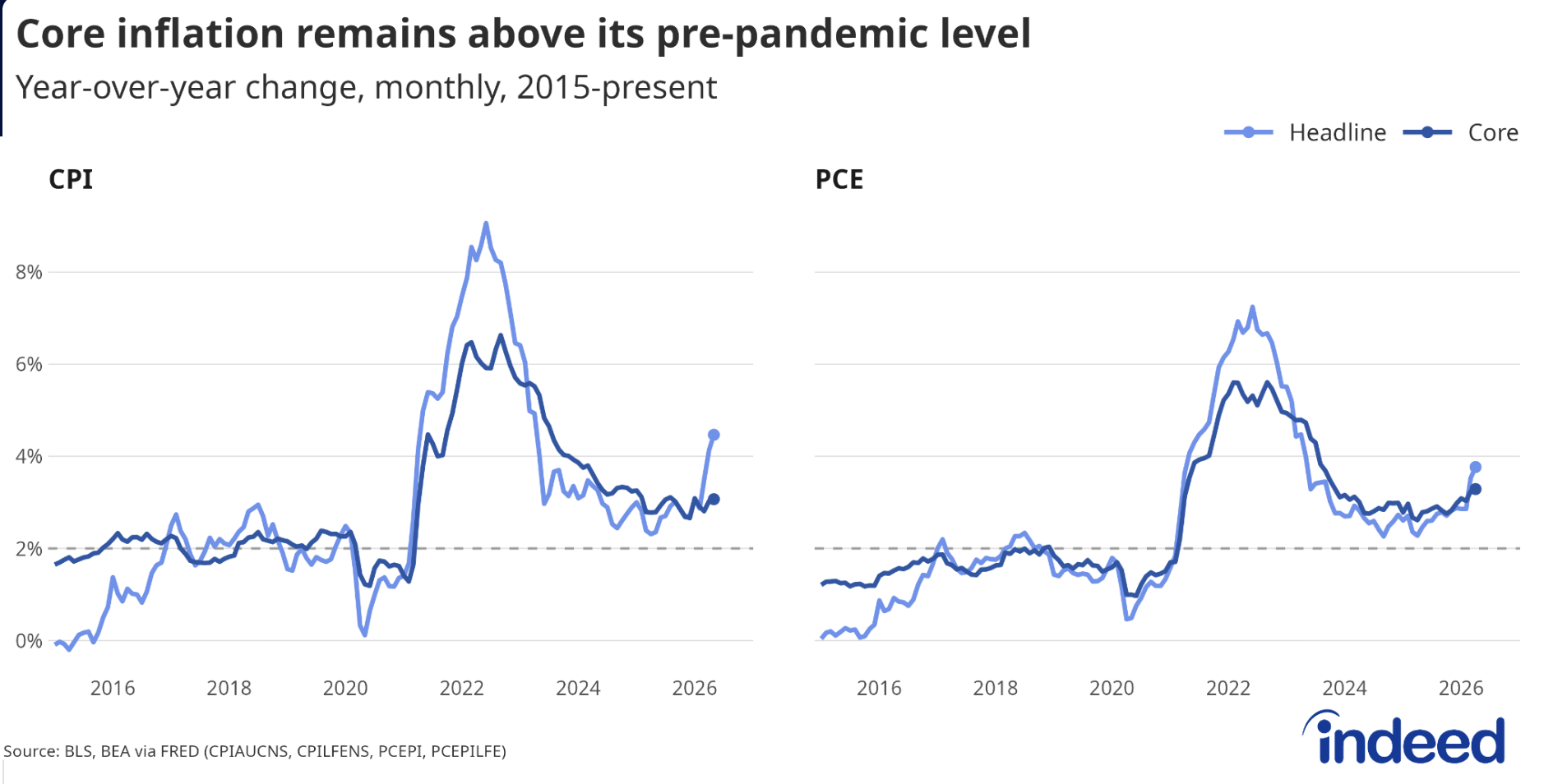
Core inflation in the United States remains above its pre-pandemic levels, settling at around 3%. In June, the Federal Open Markets Committee voted to keep its target federal funds rate unchanged, and members of the FOMC are indicating that a rate hike may happen later this year. This was reported by Felix Aidala on June 17th in Hiring Lab.
“Core inflation (which excludes more-volatile prices for food and energy), was high even before the recent surge in energy and energy-related costs, with price growth consistently staying above the Fed’s 2% target for half of a decade and counting.”
Ecological and Biological Consequences
What non-human biological systems are being crowded out?
The human population grew from 3 billion to 8.3 billion in 66 years. With all of the extractive technologies deployed to develop energy, food, and materials for this immense human population, it is not surprising that we have witnessed tremendous pressure on the other creatures who share this earth with us. Here are some recent updates in this area.
Unprecedented Heatwave in Antarctica
In June of 2026, researchers in Antarctica raised the alarm when a heatwave moved through the region, shattering existing records. Gizmodo’s Ellyn Lapointe reported on this situation on June 12.
“Temperatures at Argentina’s Esperanza base, situated in Hope Bay at the tip of the Antarctic Peninsula, reached 59.7 degrees Fahrenheit (15.4 degrees Celsius) on June 6, scientists told The Guardian. That’s 3.6 degrees F (2 degrees C) higher than the previous record-high winter temperature logged at the base in 1998.”
This is also 36 degrees F, 20 degrees C, above normal for this time of year. The Antarctic Peninsula has been warming five times faster than the global average.
June is deep winter in Antarctica and the heat wave has impacted the weather. Rather than snow, the region is receiving more rain and the Collins Glacier is melting, instead of accumulating snow and ice.

Image taken from newstory.
Animals in Antarctica Becoming Threatened and Endangered
In April, the International Union for the Conservation of Nature (IUCN) identified certain species in the Antarctic region as being more ecologically fragile.
The organization has upgraded the Emperor penguin from “Near Threatened” to “Endangered”, based on projections that its population will be cut in half by 2080.

Emperor Penguin Family. Wikipedia.
The Antarctic Fur Seal has moved from “Least Concern” to “Endangered”.
“(The Fur Seal) population has decreased by more than 50 per cent from an estimated 2,187,000 mature seals in 1999 to 944,000 in 2025. The ongoing decline is due to climate change, as rising ocean temperatures and shrinking sea-ice are pushing krill to greater ocean depths in search of colder water, reducing the availability of food for seals. Krill shortages at South Georgia have reduced the survival of pups in their first year dramatically, leading to an ageing breeding population.”
The ice-dependent Antarctic Southern elephant seal has moved from “Least Concern” to “Vulnerable.” The Highly Pathogenic Avian Influenza (HPAI) has been killing up to 90% of newborn pups in some colonies, as well as affecting adult females.
This negative feedback loop of a heating world, Antarctic ecosystem degradation, and Antarctic species fragility appears to be accelerating.
Coral Bleaching - World’s Fourth Mass Coral Bleaching Event Likely Ended in 2025
From the National Oceanic and Atmospheric Administration.
“After analyzing satellite data and bleaching observations, NOAA’s experts say the record-breaking fourth global coral bleaching event likely concluded in mid-2025.
The fourth global coral bleaching event was confirmed by NOAA on April 15, 2024. From early-2023 to mid-2025, bleaching-level heat stress impacted 84% of the world’s coral reef area in all three coral reef-containing ocean basins (Pacific, Atlantic and Indian Oceans). Mass bleaching was documented in at least 83 countries and territories.
Following the severe bleaching in Western Australia in early 2025, global heat stress has been in decline and there have been only isolated reports of coral bleaching. The Western Australia bleaching event likely bookended the fourth global event.”
Coral bleaching at Cheeca Rocks in the Florida Keys in 2023. [Credit: NOAA]
Conflict and War Posture
Where is systemic stress converting into conflict and violence?
Standing Preface
The Institute for Economics and Peace, which publishes a Global Peace Index Report each year, had this to say in its Executive Summary for 2025.
“The 2025 GPI finds that global peacefulness continues to decline and that many of the leading factors that precede major conflicts are higher than they have been since the end of WWII. More countries are increasing their levels of militarisation against the backdrop of rising geopolitical tensions, increasing conflict, the breakup of traditional alliances and rising economic uncertainty.
There are currently 59 active state-based conflicts, the most since the end of WWII and three more than the prior year. (Institute for Economics & Peace. Global Peace Index 2025: Identifying and Measuring the Factors that Drive Peace, Sydney, June 2025. Page 2)
U.S.–Israel war with Iran
(Note: this summary of the US-Israel war with Iran has been generated through ChatGPT and verified by the author. This section can be considered Class 3 content under our AI Disclosure Policy.)
As of June 22, the war between the United States, Israel and Iran has shifted from active military confrontation into a fragile diplomatic phase. Senior American and Iranian officials met in Switzerland over the June 20–22 weekend and reported progress toward a broader peace agreement that both sides say could be finalized within the next sixty days. The negotiations are focused on maintaining a ceasefire, reopening commercial shipping through the Strait of Hormuz, and creating mechanisms to prevent a return to large-scale hostilities. However, significant disagreements remain unresolved.
A June 22 Institute for the Study of War report describes the June 21 Switzerland talks as producing several concrete gains for Iran while leaving major conflict drivers unresolved. ISW emphasizes the creation of a new “deconfliction cell” for Lebanon that includes the United States, Iran, Qatar, Lebanon, and Pakistan, but excludes Israel. ISW’s assessment is that this new structure appears to replace the post-2024 ceasefire monitoring mechanism that had allowed Israel to raise Hezbollah violations directly and, in some cases, act militarily when the Lebanese Armed Forces did not address them.
The report argues that this new mechanism could constrain Israel’s ability to act against Hezbollah while benefiting Iran and Hezbollah. ISW notes that Iran is reportedly directly involved in southern Lebanon through IRGC officers embedded with or assisting Hezbollah, while Israel would now have to relay concerns indirectly through the United States. ISW also highlights conflicting positions among the parties: Iran is demanding a full Israeli withdrawal from southern Lebanon, while Israeli and U.S. officials reportedly expect the IDF to retain some presence to continue clearing Hezbollah infrastructure.
On the economic side, ISW says Iran secured relief through a U.S. Treasury sanctions waiver for Iranian crude oil and petrochemical exports through August 21, including related banking, insurance, transport, and other services. The report also notes Iranian claims of an Iran-Qatar memorandum of understanding to help unfreeze Iranian assets, though Qatar had not confirmed that claim at the time of writing. ISW does not describe any comparable Iranian concession on the nuclear issue; instead, it says Iranian officials reiterated that nuclear steps depend on other parts of the memorandum being implemented first, including ceasefires and economic relief.
Finally, ISW reports that the United States and Iran agreed to establish a direct line of communication to reduce the risk of military incidents in the Strait of Hormuz as commercial vessels transit the waterway. ISW notes that IRGC-affiliated media portrayed this line as recognition of Iranian sovereignty over the Strait, although the report characterizes the channel primarily as a mechanism to avoid maritime incidents or miscommunication. ISW also cites maritime data showing 25 vessels passed through the Strait between 2:00 p.m. ET June 21 and 2:00 p.m. ET June 22, despite Iranian claims that it had closed the Strait on June 20.
Russia-Ukraine War
High level summary from the June 22, 2026 Assessment from the Institute for the Study of War.
(Note: this summary of updates with the Russia-Ukrainian War has been generated through ChatGPT and verified by the author. This section can be considered Class 3 content under our AI Disclosure Policy.)
The June 22 Institute for the Study of War assessment argues that Ukraine is steadily expanding both the range and intensity of its strike campaign against Russian military, industrial, and logistical targets. Ukrainian forces conducted another strike near Moscow, targeting the Dubna Space Communications Center northwest of the capital. This was the third strike against the Moscow area in a week. ISW notes that these attacks are forcing Russia to strengthen air defenses around Moscow and other strategic sites, potentially at the expense of frontline deployments. Open-source reporting cited in the assessment suggests Russia has been constructing new S-400 air defense positions near Moscow and redeploying systems from combat zones to defend the capital.
The report highlights what appears to be a significant evolution in Ukraine's strike capabilities. ISW cites evidence that Ukrainian forces have increased both the depth and frequency of attacks against Russian rear areas and occupied territories. Ukrainian President Volodymyr Zelensky stated that new Ukrainian drones have already struck targets more than 2,000 kilometers from Ukraine and may soon be capable of reaching 3,000 kilometers. The report also notes a sharp increase in Ukrainian attacks on Russian oil infrastructure and military logistics since March 2026.
A major theme of the assessment is the growing pressure on Russian logistics and fuel supplies. ISW reports that Ukrainian strikes against refineries, fuel infrastructure, transport routes, bridges, ports, and logistics hubs are contributing to gasoline shortages in parts of Russia and occupied Ukraine. Russian officials have acknowledged rising fuel prices, while occupation authorities in Crimea have reportedly restricted gasoline sales, suspended ferry operations, and taken other measures to conserve supplies. The report portrays these shortages not as isolated incidents but as a consequence of Ukraine's sustained campaign against Russia's logistical backbone.
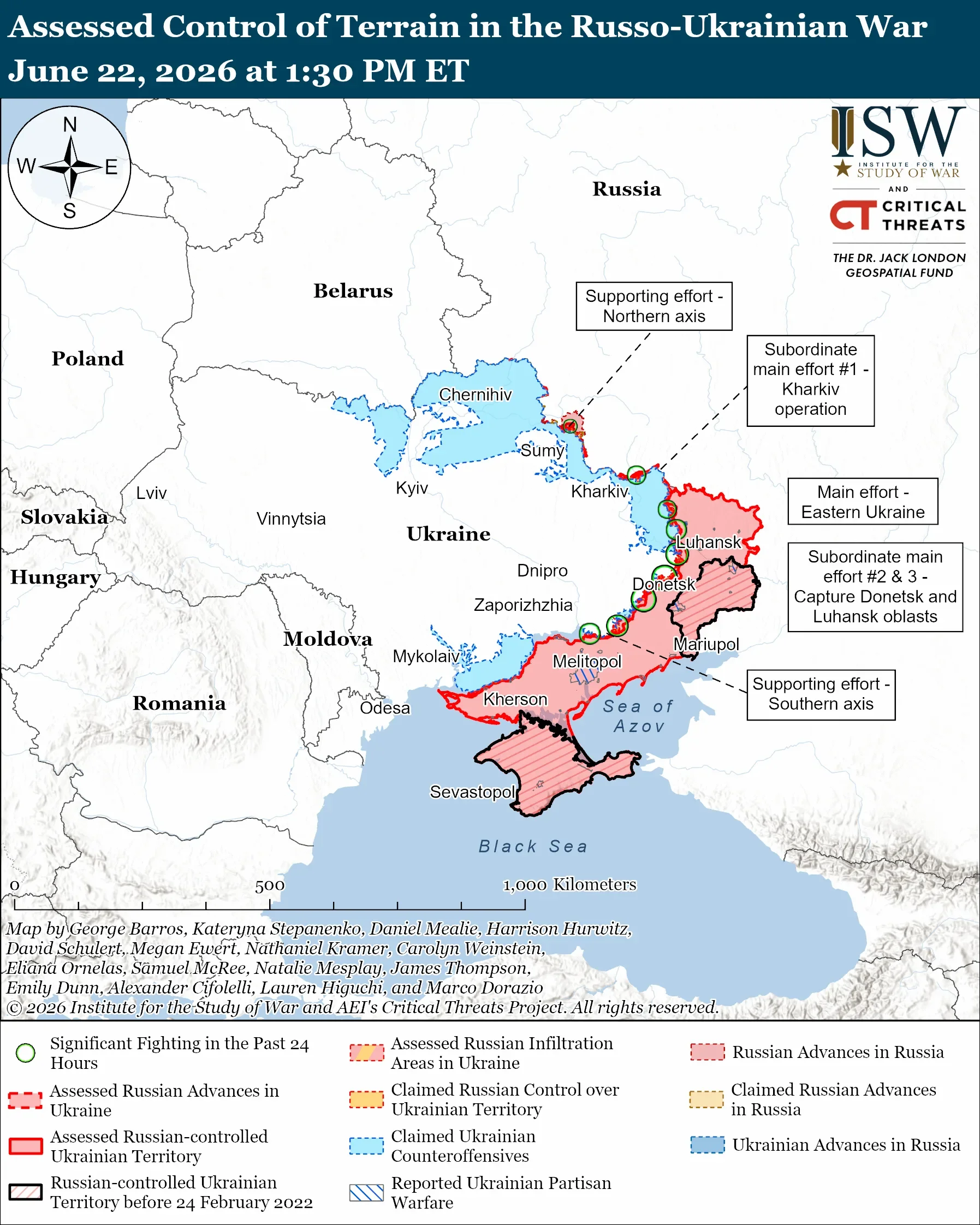
At the same time, ISW does not describe a dramatic collapse of Russian frontline positions. Russian forces continue offensive operations across multiple sectors and recently made limited gains in the Kupyansk direction. The assessment repeatedly notes that many Russian claims of major breakthroughs appear exaggerated and, in some cases, may rely on manipulated imagery. Overall, the report presents a picture of a war in which the front lines remain contested, while Ukraine increasingly seeks to weaken Russia by striking deep into its military-industrial system, fuel network, transportation corridors, and air-defense infrastructure.
There is an acceleration of technology happening on the Ukrainian side as the country continues to develop drones that can travel thousands of miles/kilometers and deliver significant damage. This new technology for drone warfare is transforming military strategic thinking in real time, and the future of warfare.
Acceleration of Technology
What new capabilities entered the system this month?
More humans mean more analytical power, more curiosity, more creative exploration. Technological acceleration is a fascinating, if not defining, feature of our current times. This issue is so significant, there are online media sites dedicated to writing daily about technology developments, their cultural impacts, and the politics and money behind them: Gizmodo and Wired Magazine, for example.
In this section of our newsletter, we highlight a couple recent technological advances.
NASA’s Artemis II Mission
One of the most inspiring technological feats that happened in the last few months was NASA’s Artemis II Mission. NASA, the National Aeronautics and Space Administration, is a United States government agency responsible for the U.S.’s civilian space program and for aeronautics and aerospace research. The last flight of humans to the moon was in December of 1972, 54 years ago.
As NASA reports:
“On April 1, 2026, Artemis II launched on a nearly 10-day voyage around the Moon, marking the first crewed flight of NASA’s Orion spacecraft. NASA astronauts Reid Wiseman, Victor Glover, and Christina Koch, along with CSA (Canadian Space Agency) astronaut Jeremy Hansen, splashed down on April 10 in the Pacific Ocean off the coast of San Diego.
At their farthest point, the crew traveled 252,756 miles from Earth, setting a record for the greatest distance humans have traveled in space and observing the lunar surface like never before.
Under Artemis, NASA will send astronauts on increasingly complex missions to explore the Moon for scientific discovery, economic benefit, and to prepare for future human missions to Mars.”
During the space voyage, the Artemis II crew observed and documented features from the never seen portions of the moon’s surface. They also took stunning new photos of the earth and the moon.
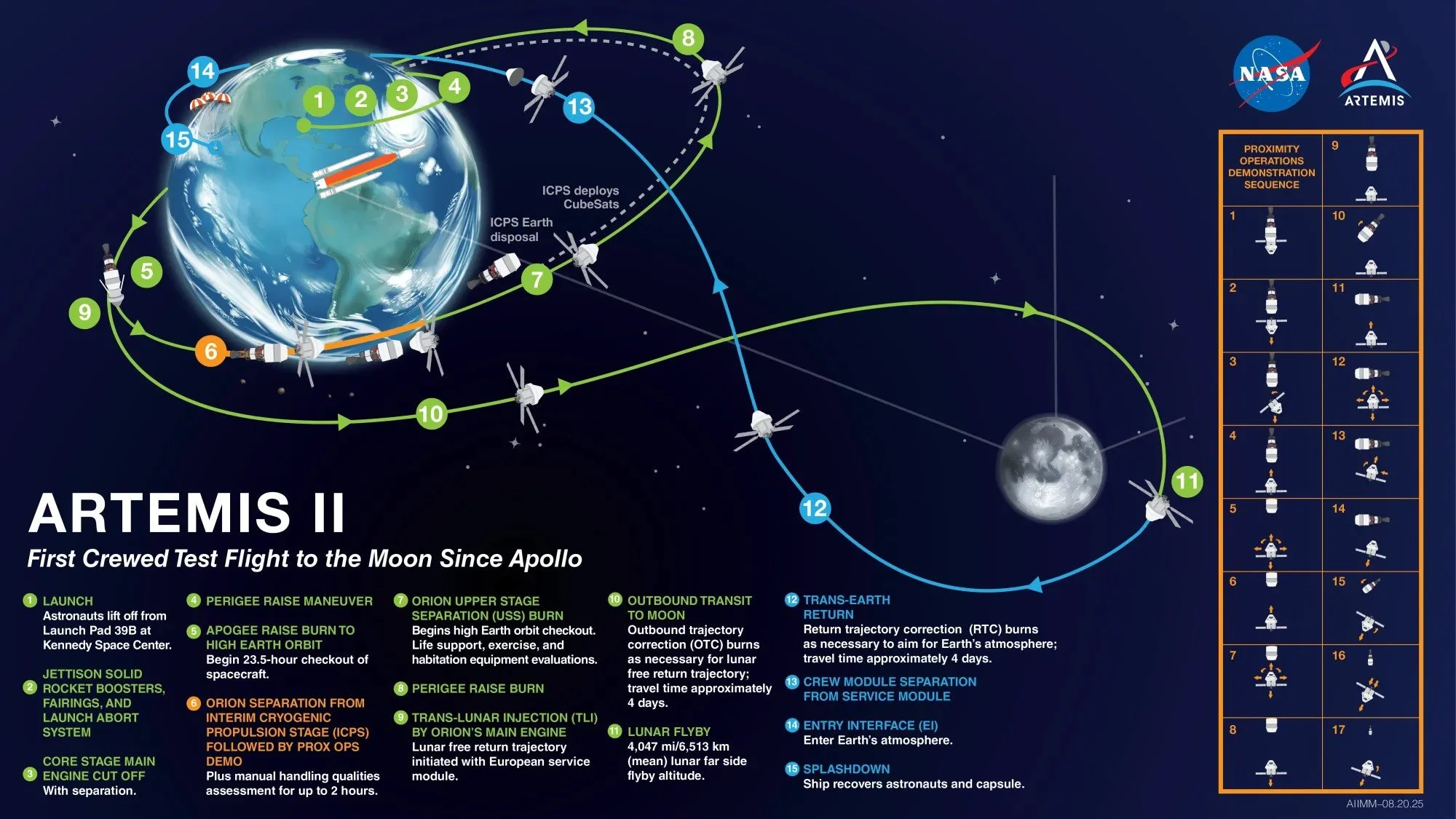
Artemis II is part of a long term project for NASA, which includes: establishing sustainable exploration infrastructure on and around the Moon and developing technologies and capabilities for an eventual crewed missions to Mars.
Originally, NASA’s next stated goal was for a crewed lunar landing on the moon with Artemis III in 2027. However, there have been delays in the development of SpaceX’s Starship Human Landing System. NASA has since revised its timeline and scheduled Artemis IV to land on the lunar South Pole in 2028.
In June, NASA issued a news release about the Artemis III mission. According to the news release, the Artemis III mission in 2027 will focus on complicated maneuvers in low Earth orbit. The purpose is for NASA’s Orion spacecraft to “demonstrate rendezvous and docking capabilities with test versions from one, or both, American commercial human landing systems in development by Blue Origin and SpaceX.”
The Rise of Sodium-Ion Batteries
Batteries used for electric vehicles rely on the element lithium, which has limited and geographically constrained supplies. Much of the production chain that does exist today is controlled by China. Yet, recent advancements have been made with sodium-ion batteries that could relieve some of the pressure on the demand for lithium.
Wyatt Fischer with The Cool Down reported on June 23, 2026.
“A radical sodium-ion breakthrough in battery technology could change everything for the EV, solar, and general storage markets, while also holding the key to dampening tense geopolitical issues. The new battery study is drawing attention by pointing to a future in which electric vehicles and home energy storage systems are not dependent on lithium alone.
Commercial sodium-ion cells were shown to charge in about 15 minutes, continue operating in severe cold, and potentially offer a lower-cost alternative. The research was conducted at RWTH Aachen University using 120 commercially made sodium-ion cells from Chinese battery maker HiNa.”
Paula Vargos with Digital Trends also reported on this story.
“Researchers testing HiNa’s cells found consistent output across a large sample, high power capability, and a design that echoes key choices in Tesla batteries. The low-cost sodium battery still has work ahead, especially around charging in freezing conditions, but it points to a cheaper path for EVs, grid storage, and commercial vehicles that don’t need maximum driving range.
For automakers, the supply-chain angle could be as valuable as the performance result. Sodium is widely available and cheaper to source than lithium, which could help battery makers avoid some of the price swings and supply constraints that have dogged lithium-ion production.”
General Motors has decided to seize the initiative and recently announced a partnership to develop and scale sodium-ion batteries. The immediate return on investment won’t be in electric vehicles at all. GM sees a more immediate need to provide power for the US grid and new AI Data Centers. Rahaan Mazumder with Motor Biscuit shared the story on June 18, 2026.
“The automotive industry has been locked in a desperate, multi-billion-dollar cage match to secure enough lithium to build electric vehicles. But as the sheer scale of the global transition to battery power becomes a reality, automakers are realizing that relying on a single, highly constrained chemical element is a recipe for disaster.
“General Motors just fired a massive warning shot across the industry, officially signaling that the future of massive energy storage won’t be lithium at all—it will be salt.
“According to a major partnership announcement detailed by Utility Dive, GM and its venture capital arm have teamed up with US-based startup Peak Energy to develop and scale domestic sodium-ion batteries. But the ultimate masterstroke of this deal is exactly where these new batteries are going.
“GM is explicitly keeping this new technology out of its cars, completely pivoting its sodium-ion development to power massive, stationary grid-scale storage systems and AI data centers instead.”
Should sodium-ion batteries scale and take hold, this technology has the potential to impact how energy gets stored and used; and also transform geopolitical tensions that have been created around lithium supplies.
Closing
We live in a media landscape that has millions of voices instantly commenting on the latest developments every day. However, biological and earthly systems move like glaciers: slowly reshaping their surroundings in profound ways.
Through the InContext newsletter, we offer a framework for “Slow News” - a periodic analysis of some of the key forces operating in our time. Human beings do not like to think of ourselves as the result of larger systems. Yet we emerge from and are shaped by these systems. Tracking these systems over time can give us insight into what challenges and possibilities exist - personally, economically and politically - to help us stay in balance with our rapidly changing world.
Until next time.
Yours in Consciousness,
Ek Ong Kaar K. Michaud

InContext is our periodic newsletter, where we discuss recent world events through the Restoration Economics lens. If you have feedback or would like this newsletter sent directly to your email, please click here.